
Policy

Policy articles provide in-depth analysis of social and public policy, examining their wide-ranging impacts on economics, social life, public health, individual liberty, evidence-based decision-making, and institutional accountability.

We cover critical areas such as healthcare and vaccination policies, pandemic responses and WHO, economic subsidies, national security strategies, withdrawals from international bodies, and pathways to reform that restore freedom, truth, and human dignity over centralized control.

All articles from Brownstone Institute are translated into multiple languages to support global access, foster international dialogue on governance and reform, and empower readers worldwide to challenge flawed interventions.

A Primer on the WHO, the Treaty, and its Plans for Pandemic Preparedness

SHARE | PRINT | EMAIL

These proposed rules and structures, if adopted, would fundamentally change international public health, moving the center of gravity from common endemic diseases to relatively rare outbreaks of new pathogens, and building an industry around it that will potentially be self-perpetuating.

A Primer on the WHO, the Treaty, and its Plans for Pandemic Preparedness Continue Reading

The WHO Changes Guidelines to Favor Lockdowns

SHARE | PRINT | EMAIL

The report says this recommendation will be incorporated into the WHO’s “normative work,” meaning it will be part of official WHO guidance to states in responding to a pandemic. Worse still, it says it’s already being implemented – it doesn’t need a treaty or the agreement of member states to do this, it’s already happening.

The WHO Changes Guidelines to Favor Lockdowns Continue Reading

Australia: Champion Covidiot

SHARE | PRINT | EMAIL

No, Australia’s “trust in institutions” has not served it well during this period. What has happened is that we have seen how corrupt and/or incompetent the people in charge of our institutions really are, and – to our horror – how our misplaced trust in those institutions has led to an abject failure of our systems of democratic oversight and accountability.

Australia: Champion Covidiot Continue Reading

Can We Now See that Economics Does Not Diverge from Public Health?

SHARE | PRINT | EMAIL

They wrecked social and market functioning and cannot fathom why we have a demoralized population, a mental health crisis, falling financials, soaring inflation, and shortages of goods and services that are essential to life. This is what the experts recommended and yet here we are today. 

Can We Now See that Economics Does Not Diverge from Public Health? Continue Reading

Congress and the Pandemic Response: An Interview with Thomas Massie

SHARE | PRINT | EMAIL

In this interview, Congressman Massie shares the inside story of those absolutely critical first weeks of lockdowns, providing a deep and penetrating look into why he believed what he did and what fallout that brought down on him during a national hysteria.

Congress and the Pandemic Response: An Interview with Thomas Massie Continue Reading

The New Rift Between WHO and China

SHARE | PRINT | EMAIL

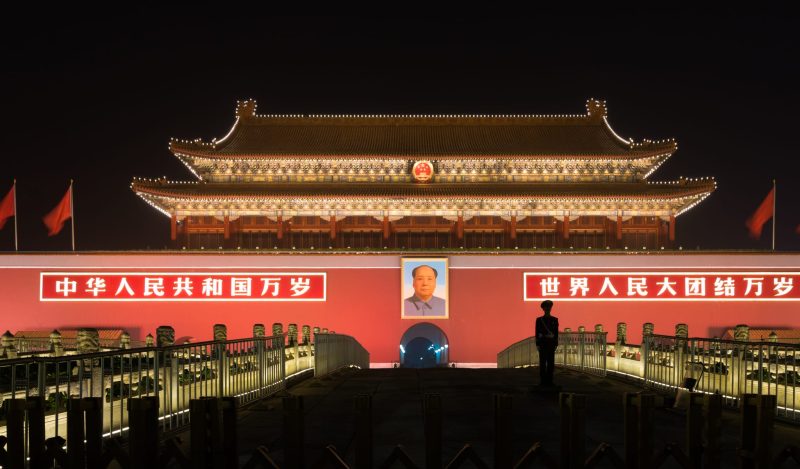
Despite Tedros’s censored words, it’s no wonder that Xi Jinping continues to feel vindicated and affirmed, and sees no real political danger in choosing his own power over the health and well-being of his people. Governments around the world still cannot muster the courage to make a full-throated and solid attack on zero-covid, for fear of the implications of such a concession. Nudges and hints, even from the WHO, will not do it. 

The New Rift Between WHO and China Continue Reading

Why the Silence on Lockdowns?

SHARE | PRINT | EMAIL

They managed to destroy countless businesses, upend human rights, kill millions, cast hundreds of millions deeper into poverty, strain the mental health of billions, and transfer trillions of dollars in wealth from the world’s poorest to the very richest—all while failing to slow the spread of a virus that was subsequently confirmed to have an infection fatality rate under 0.2%.

Why the Silence on Lockdowns? Continue Reading

failure

Why Won’t They Admit Failure?

SHARE | PRINT | EMAIL

Looking back, there is nothing terribly surprising about any of this. It’s a consequence of safety culture, arrogant elites, and a belief that powerful, rich, and intelligent people can manage the world better than the rest of us. We’ve been here many times in history, and it has always foreshadowed a long period of suffering. 

Why Won’t They Admit Failure? Continue Reading

Join 30,000+ Independent Readers: Get the FREE Brownstone Journal Newsletter